
No-Bake Apricot Cheesecake
As an Amazon Associate, I earn from qualifying purchases.
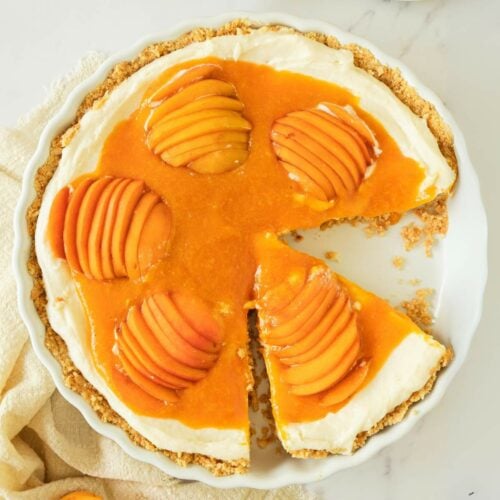

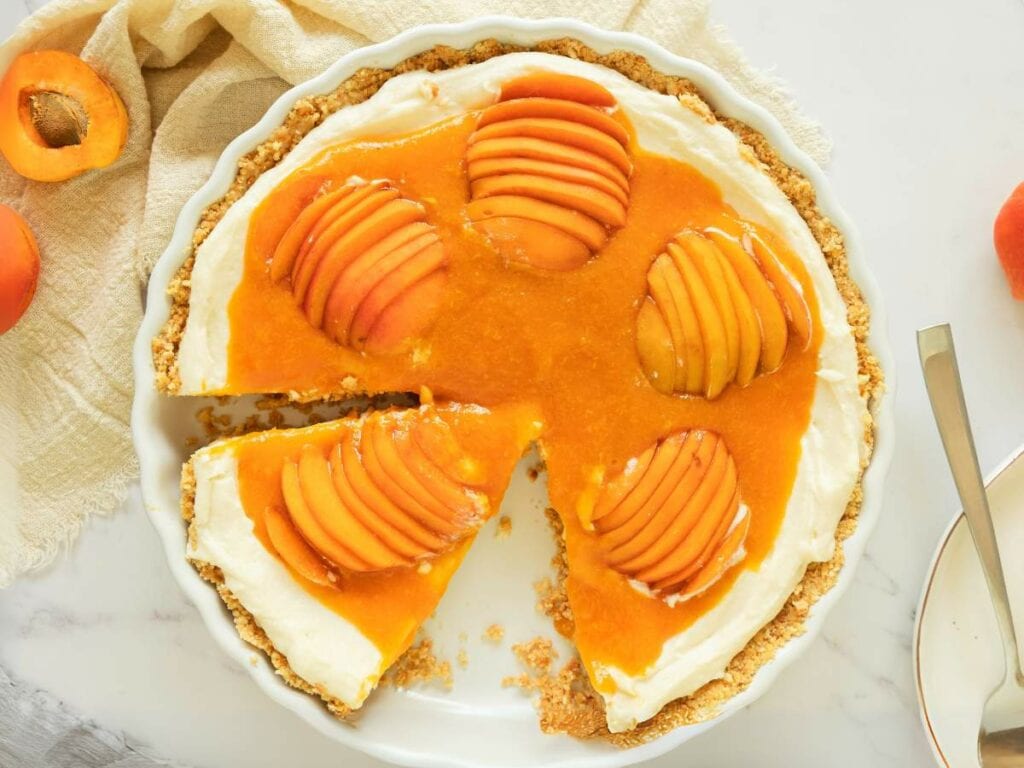
I want a no-bake apricot cheesecake to really taste like apricots, and this one gets there by using them twice. A pound of them cooks down slowly with brown sugar, two cardamom pods and a couple of lemon slices, until it turns thick and glossy and smells like the inside of a jam jar. That layer goes over the cream cheese. Three more apricots, sliced thin and fanned across the top, stay completely raw. You get the cooked fruit and the fresh fruit in the same bite, and nothing here ever sees the oven.
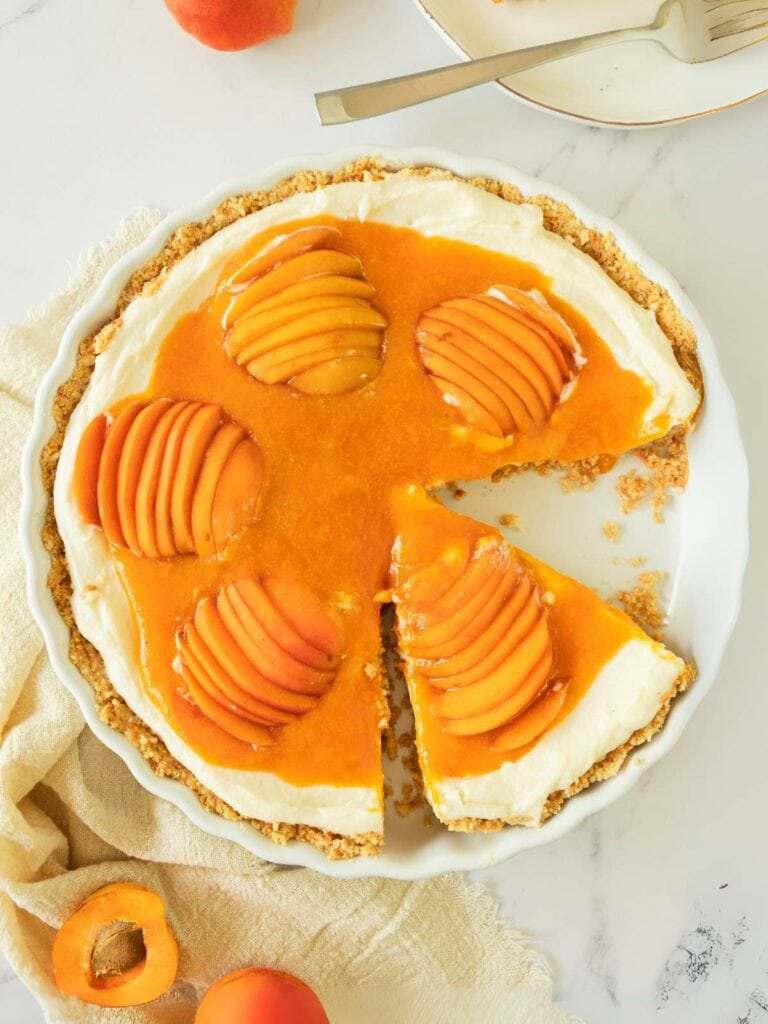
When apricots are actually good, I don’t usually make anything with them. I just eat them, fresh and juicy, straight from the farmers market. Cooking good fruit usually means you didn’t trust it to be enough on its own, and that kept me off this recipe for a long time.
However, the raw slices changed my mind. Half the fruit never gets heated at all, so the cooking is doing a job here rather than covering for something. It’s the same move that makes the no-bake mango cheesecake work, cooked fruit under fresh fruit rather than instead of it.
I’ve said before that peak season berries are too good to bake, which is why my strawberry crumble is built around frozen ones. Apricots get the exception, and only because of the raw slices on top. If you want the bright, not-chocolate end of things and not the cheesecake part, lemon angel pie gets there with a baked meringue shell instead of a crumb crust. The rest of my favorite sweet treats live in my dessert collection that will serve you once apricots are done for the year.
How It Comes Together
Four things happen here and only one of them needs watching.
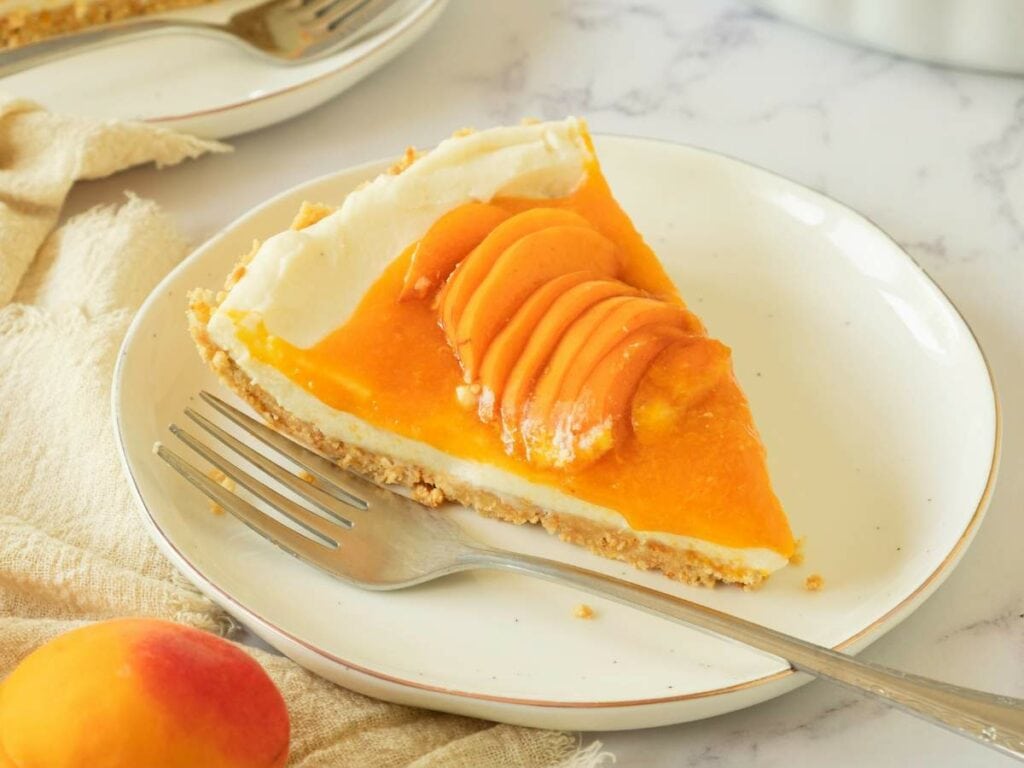
The crust is crumbs and melted butter pressed into the dish, and the only thing to get right is pressure. Press it hard, especially into the corner where the base meets the side. A no-bake crust has nothing but cold butter holding it together, and a loose patch will crumble the first time a slice comes out.
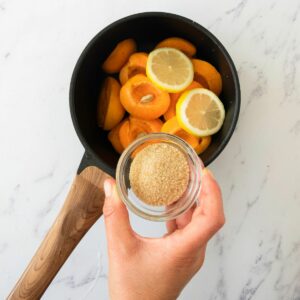
The apricots are the part that needs watching. Peeled and pitted, they go into a small saucepan over medium heat with the brown sugar, the cardamom pods and the lemon slices, and they cook until they collapse and the liquid around them thickens.
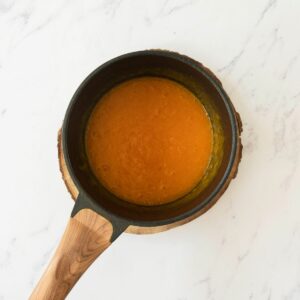
Soft isn’t the finish line. You want it thick enough to hold a track. Drag a spoon across the bottom of the pan and the line should fill back in slowly, not instantly. Fifteen minutes is the number on the card, and fruit that’s drier than it looks will run longer than that.
Let the cooked apricots come all the way to room temperature before they go anywhere near the filling. Warm fruit melts a channel down into the cream cheese and the two layers bleed together.
Once it’s cooled, the pods and lemon slices come out, and it gets blended. How far you take it is a real choice. Blend it smooth and it reads glossy and deliberate, and stopping short leaves you visible pieces of fruit and more texture.
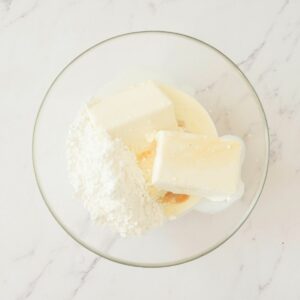
The filling is cream cheese, heavy cream, powdered sugar and vanilla beaten to soft peaks and no further. Past soft peaks, and the cream can break. You might not see it happen, but you’ll feel it later, as a grainy edge in a layer that should be completely smooth.
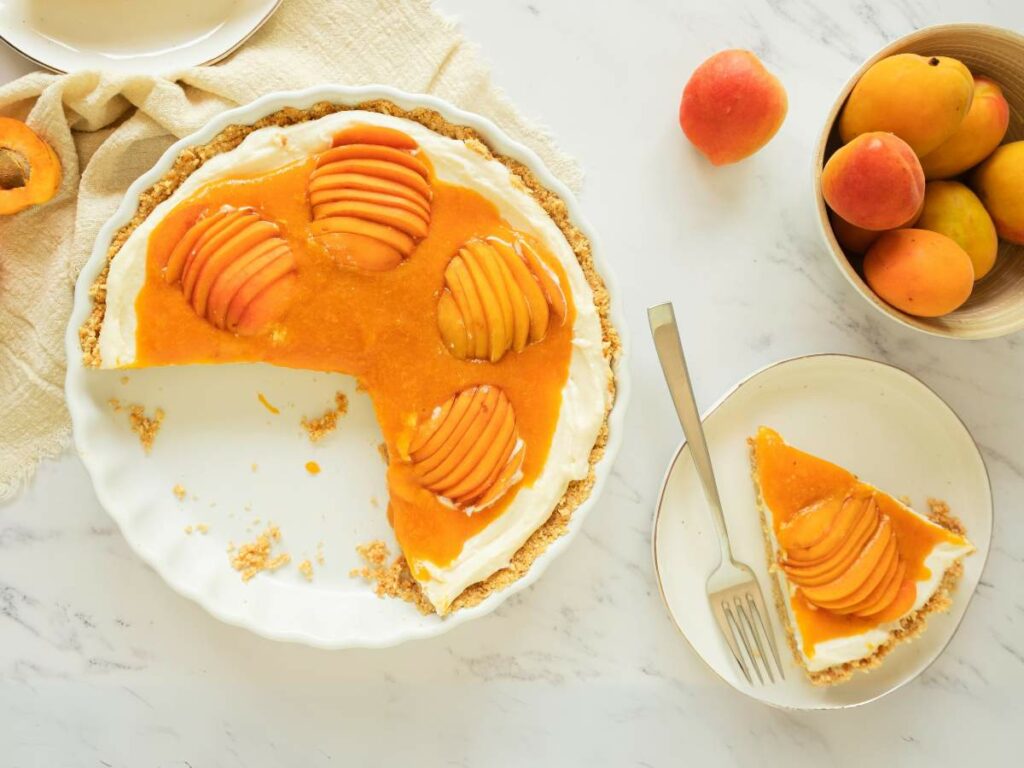
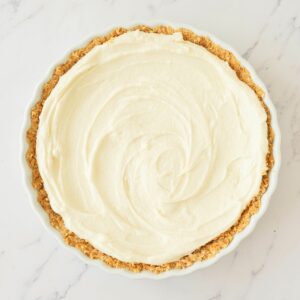
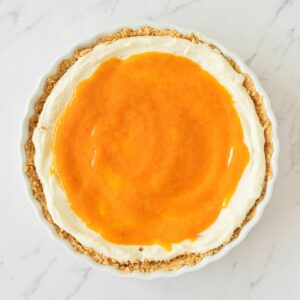
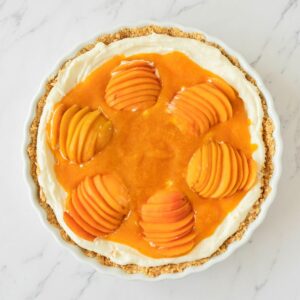
Assembly is the filling first, spread flat, then the cooled apricot layer spooned into the middle with a couple of inches of bare filling left around the edge so it doesn’t run down the side. The raw slices go on last.
The full ingredient list, the measurements and the numbered steps are in the recipe card at the bottom of the post.
Ingredient Notes
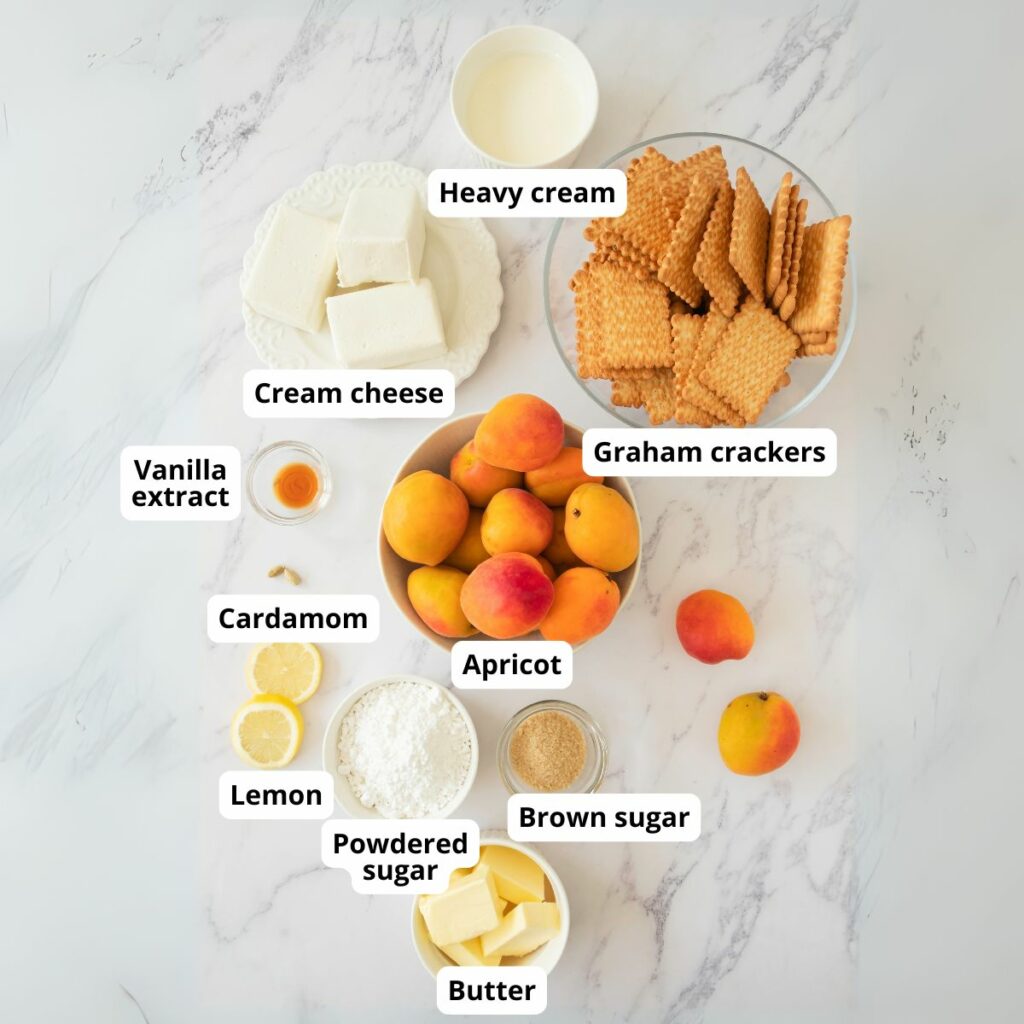
Apricots. A pound gets cooked and three stay raw, and they’re doing completely different jobs. The cooked pound only needs to be ripe enough to collapse, so slightly soft fruit is fine here and even helpful. The three you slice for the top are the ones to be picky about, because nothing is going to improve them between the counter and the plate. Deep golden orange, a little give under your thumb, and they should smell like apricot before you buy them.
Cardamom pods. Two whole pods, and they come out again before you blend, which is the whole reason the recipe asks for pods instead of ground. They steep their flavor into the syrup and then leave, so you get the perfume without any grit. Cardamom is hard to pin down if you have not cooked with it much, and the closest I can get is that it sits nearer a strong cup of black tea than a baking spice. I keep it in the house mostly for chai ice cream, and it’s one of the few spices where nothing else will stand in for it. If you’ve only got ground, a pinch does the job, but it stays in the mix and reads stronger and a little duskier than the pods do.
Light brown sugar. A tablespoon and a half across a full pound of fruit, which tells you it’s there for the molasses rather than to sweeten anything. That’s what takes the cooked layer toward caramel instead of stopping at jam. White sugar will sweeten it and leave the color flat.
Lemon slices. Two slices rather than a squeeze of juice. Slices give a rounder, gentler acidity and you can pull them out the moment the flavor is where you want it, whereas juice commits you the second it goes in.
Cream cheese. Full-fat block cream cheese, not the tub. In the US, Philadelphia is the one to reach for. The spreadable tubs carry extra water and stabilizers so they stay soft straight out of the refrigerator, which is exactly the wrong quality in a filling that has to set on its own with no gelatin and no oven.
Heavy cream. Heavy cream, not half-and-half and not whole milk. The fat is doing structural work here, whipping up with the cream cheese to hold the layer together, and half-and-half doesn’t carry enough of it to get there. Of everything on this list, swapping this would be the one choice that will actually cost you the dessert.
Unsalted butter. I cook and bake with unsalted butter almost without exception, and it matters more than usual in a crust carrying this much of it. Salted butter pushes a sweet crumb crust toward savory, and there’s no taking it back out once it’s pressed into the dish.
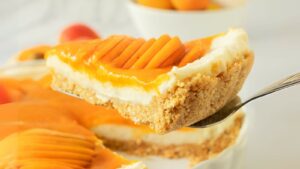
Graham cracker crumbs. Eight ounces makes a thick crust, which suits a dish you serve from rather than unmold. Press it up the sides as well as across the base so every slice comes out with a wall.
Substitutions and Variations
- Frozen apricots. Thaw them completely and drain them hard, or the extra water will thin the cooked layer and it’ll never thicken properly. Use them for the cooked pound only, not for the raw slices on top.
- Canned apricots. The off-season answer. Drain them well, leave the added water out, and pull the brown sugar back since they’re already packed in syrup.
- Peaches, nectarines or plums. Any stone fruit cooks down the same way. Plums take the color darker and run more tart, so taste before you decide whether it needs the full sugar.
- Mascarpone for part of the cream cheese. Swapping a few ounces gives a silkier, less tangy filling. Don’t swap all of it. The cream cheese tang keeps the cooked apricot layer from reading as straight sugar.
What I’ve Learned Making This
I don’t freeze cheesecake and I wouldn’t start here. A filling this rich separates as it thaws, and a fruit layer that’s already been cooked down will weep on top of it. Three days in the refrigerator is the honest life of this one.
There are two lemon slices cooked into the apricot layer and they’re the reason the whole thing doesn’t land as flatly sweet. If that’s the part you like, a café romano runs the same trick in a cup, lemon cutting through something rich, which is the same reason it works here.
No-Bake Apricot Cheesecake With Cardamom
Ingredients
- 1 pound fresh apricots plus 3 apricots for decoration
- 8 ounces graham cracker crumbs
- ½ cup butter unsalted
- 10 ounces cream cheese
- 1 cup heavy cream
- 1 cup powdered sugar
- 1 ½ tablespoons light brown sugar
- 1 teaspoon vanilla extract
- 2 whole cardamom pods
- 2 slices lemon
Instructions
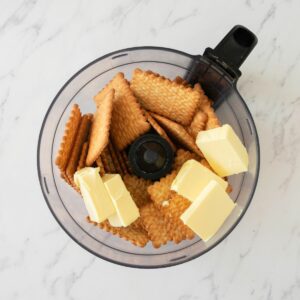
- Add the graham cracker crumbs and melted butter to a blender or food processor.

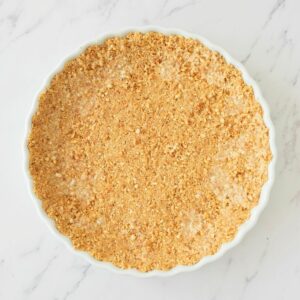
- Pulse until everything’s well mixed and the crumbs look like wet sand. Pour the mixture into your tart pan, press it down firmly with your hands, and spread it out evenly to form the base.
- Peel and pit the apricots and toss them into a small saucepan with the brown sugar, cardamom pods, and lemon slices. Cook over medium heat for about 15 minutes, stirring now and then, until the apricots soften and everything starts to break down into a syrupy mixture.
- While the apricots are cooling, beat the cream cheese, heavy cream, powdered sugar, and vanilla together in a bowl using an electric mixer. Keep mixing until the texture is smooth and fluffy with soft peaks, about three minutes.
- Pour the cream cheese filling into the crust and spread it out evenly.
- Once the cooked apricot mixture has cooled a bit, remove the lemon slices and cardamom pods, then blend until smooth. You can use a blender, immersion blender, or electric mixer.
- Spoon the apricot sauce over the center, leaving about two inches around the edges.
- Slice up a few fresh apricots and place them on top for a pretty finish.
- Transfer the tart in the fridge for 4 hours to let it set. Once chilled, slice and serve cold. It’s even better the next day if you want to make it ahead.

I made this but suggest adding a step to remove the pits from the apricots before tossing into the saucepan. Also powdered sugar is listed in the ingredients but is not used in Step 3 (beat the cream cheese, heavy cream, and vanilla together in a bowl) as well as add an estimate for how long to beat the mixture.
Thank you so much for the careful eye, Madison! You’re absolutely right on all three counts. The pits definitely need to come out before the apricots go in the saucepan, and the powdered sugar should be added in Step 3 along with the cream cheese, heavy cream, and vanilla. Beat the mixture for about 2 to 3 minutes until it’s smooth and fluffy with soft peaks. I’m updating the recipe now to make those steps clearer. I’ll also move the in process images into the recipe card so you get a visual exactly when you need it. This is a change we have been applying more recently. I really appreciate you taking the time to flag this! Thank you!