Avocado Deviled Eggs Without Mayo
As an Amazon Associate, I earn from qualifying purchases.

We keep about forty hens. Production drops off now and then, and a few weeks later one of them walks out of the brush with a batch of chicks behind her. They look like pom-poms with legs. So there are always eggs in this house, and because we sell them, the eggs are always moving. Fresh ones go out, older ones stay behind, and I know which is which. That’s the part that matters for deviled eggs without mayo. Older eggs peel clean, and a deviled egg is nothing if the white tears.
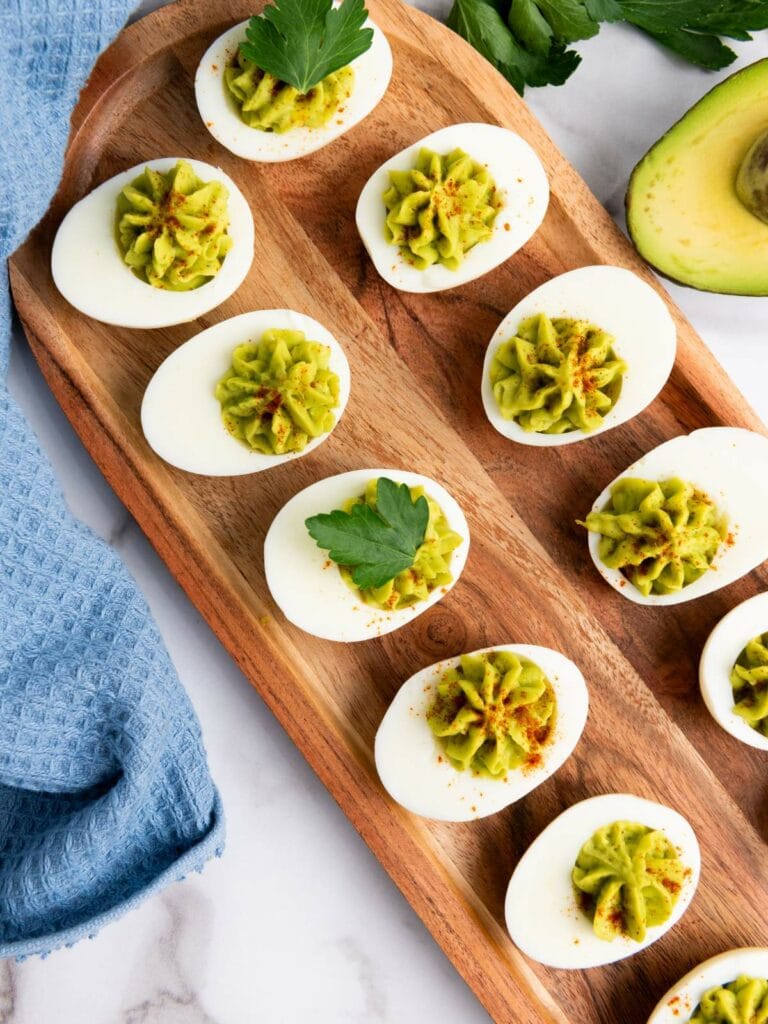
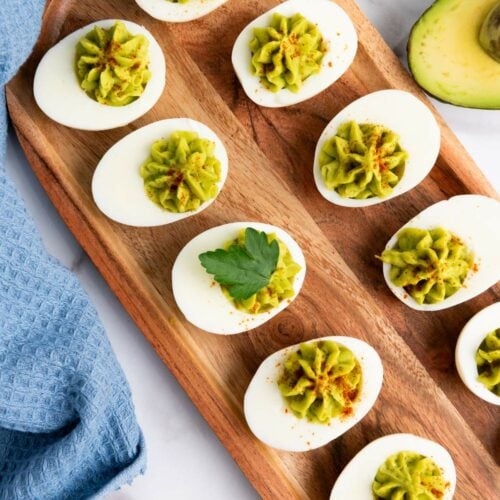
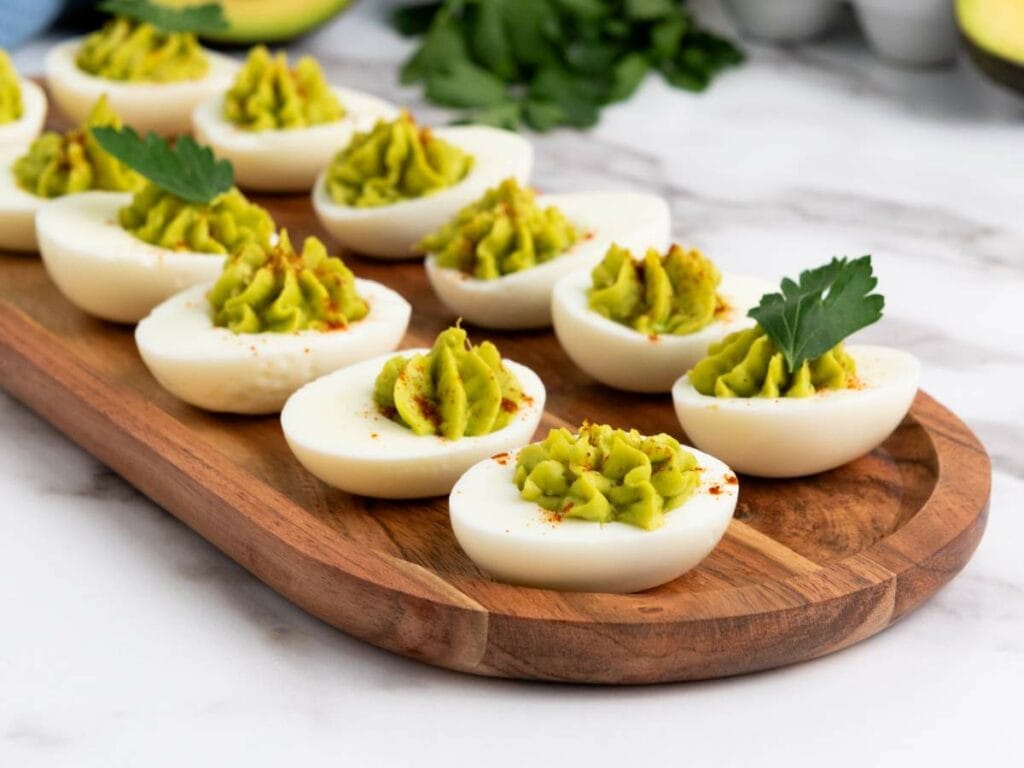
These are what I make when the kids are around, and I want lunch to feel like an occasion, and for brunch with friends, where they go on the table beside a cheese and onion quiche and hold their own. They’re also a dish people look at before they eat. That’s why I peel these particular eggs the way I do, and why the filling goes in with a piping bag instead of a spoon. On a plate where the white is most of what anyone sees, a torn one is the whole problem.
Deviled eggs earn a place on a holiday table for the same reason. They sit cold next to something hot like bacon-wrapped asparagus, or go out early with the cucumber pinwheels while everything else is still in the oven. Easter is when I make the most of them, and my other Easter recipes are all in one place if you’re building the whole table. But I make them in November for Thanksgiving and December for Christmas too, and they go just as fast.
How It Comes Together
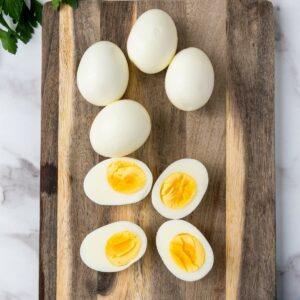
Start the eggs in cold water with an inch over the top and bring the pot up to a boil. Then cut the heat, put the lid on, and leave them alone for 10 minutes. I don’t drop it back to a simmer the way some recipes tell you to. The water is already as hot as it’s going to get, and it holds that heat under a lid long enough to finish the job without pushing the yolks any further than they need to go.
Ten minutes is longer than I’d normally go. Left to my own preferences, I like a 6-minute yolk, soft in the middle, for eating on its own, but that’s the wrong yolk for this recipe. A soft yolk won’t mash into a filling you can pipe, so the 10 minutes is there on purpose. The yolk needs to be set through, not sitting soft in the middle of a halved egg.
Move them straight into ice water. Not cool water, ice water, and give them at least five minutes. Ten if you’re not in a hurry. This step decides whether the shell lifts off or takes the white with it.
Peeling is where this recipe is won or lost. I tap the egg all over on the counter until the shell is crackled everywhere, then find the wider end, where the air pocket sits. That’s where you can get a fingernail under the membrane. Once you’re under it, the shell usually comes away in one piece.
When it matters how they look, and for these it does, I peel with a spoon. Slide the bowl of a teaspoon between the membrane and the white and work it around the egg. It sounds fussy, and it takes longer. But a spoon doesn’t gouge, and a spoon-peeled white comes out smooth enough that nothing you do to it afterward will show. If I’m taking these somewhere, I peel every single one this way.
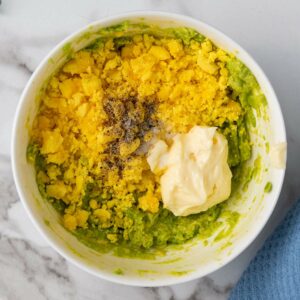
The rest is quick. Halve the eggs lengthwise, pop the yolks into a bowl with the mashed avocado, add the sour cream, lemon, salt and pepper, and mash until there are no streaks left. Rinse the empty whites to get any yolk off them and pat them dry.
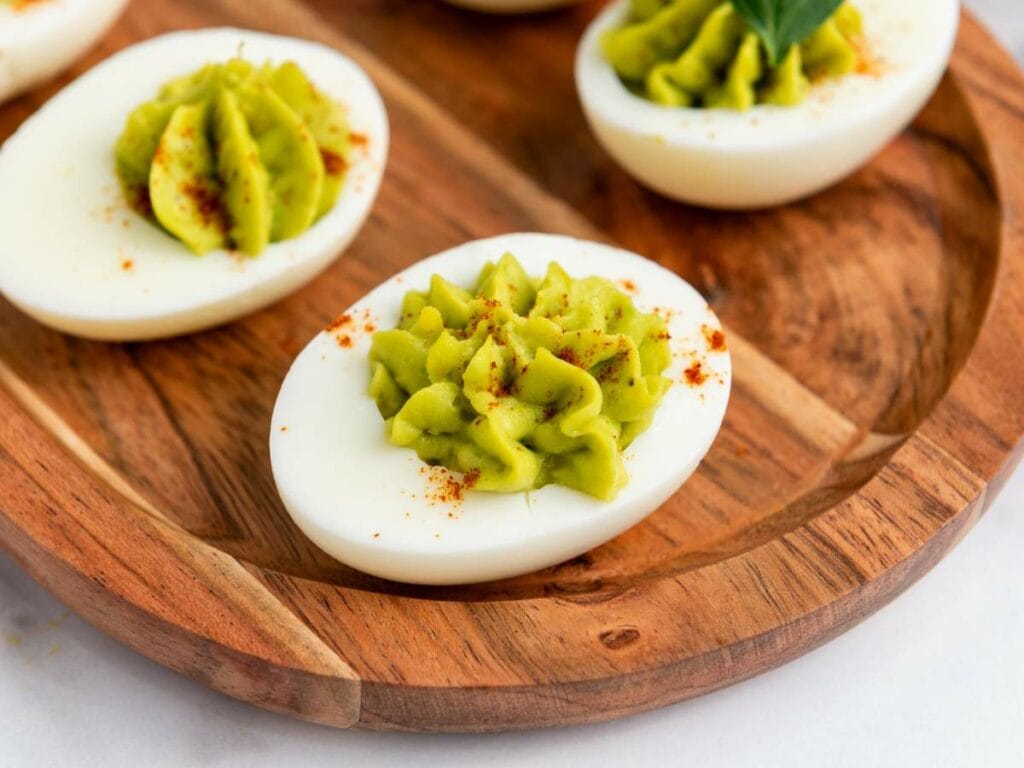
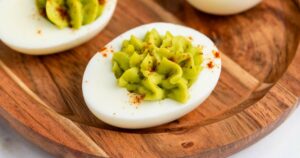
Then use a piping bag. A spoon will get the filling in there, but it lands crooked and sits low. So you go back in with the tip of the spoon to push it around, and that’s one more chance to tear the white you just spent all that care keeping intact. Piped filling builds up evenly and stays where you put it. It’s also the fun part.
Scroll down for the printable recipe card with the full ingredient list, measurements and step-by-step instructions.
Ingredient Notes
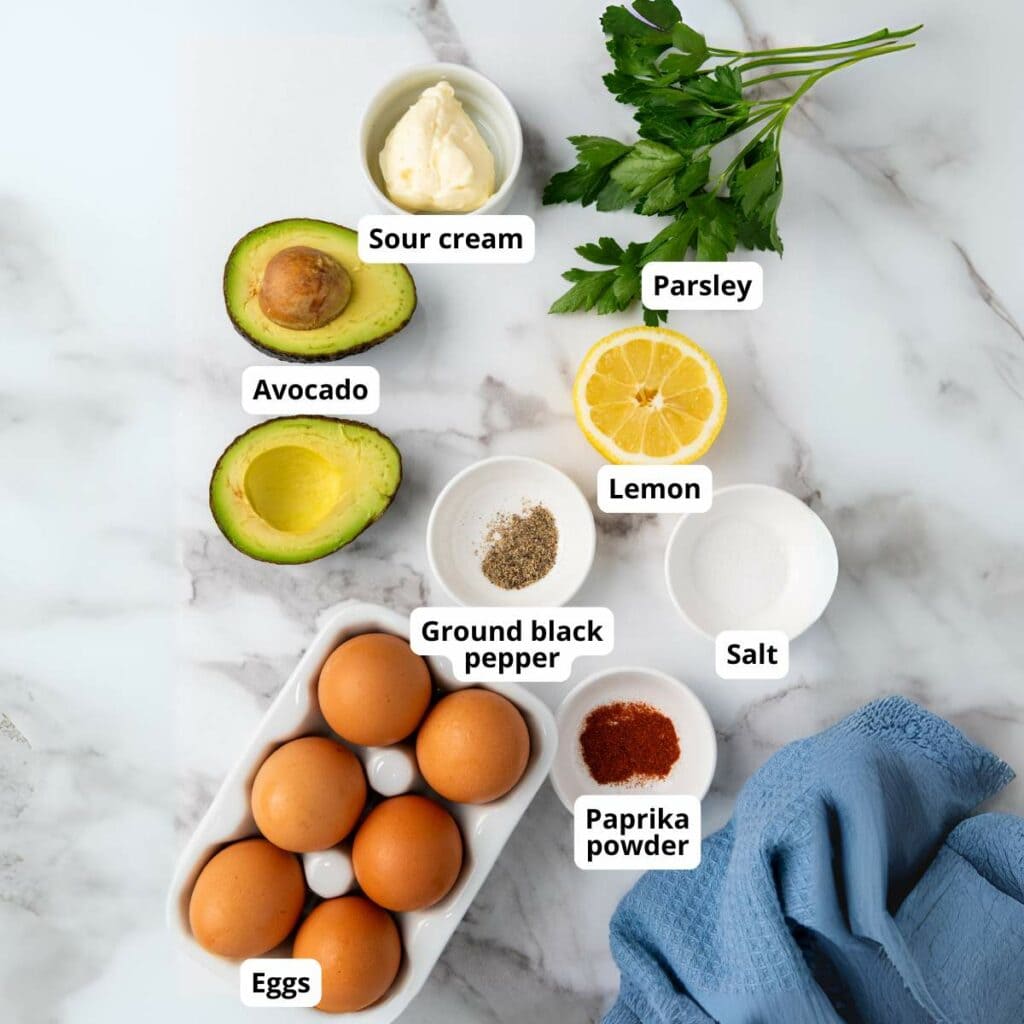
Avocado. One medium, and I want it to be Hass. I’m not going to pretend to be neutral about this. Hass is the best avocado there is. That said, use what your store has, because a different variety won’t break this recipe. An underripe one will, because it mashes into lumps that won’t go through a piping tip, and so will one that’s turned stringy. You want the avocado to give under your thumb without feeling hollow. If you’re never quite sure which one to pick up, my post How to Buy, Ripen and Store Avocados goes through it in detail.
Sour cream. Two tablespoons, full-fat, because that’s what I buy. Lower-fat will work, and so will plain Greek yogurt, which is what most no-mayo deviled egg recipes use as their entire base. Here, it’s doing a much smaller job, so the swap is low-risk.
Lemon. Half a lemon, juiced. It brightens the filling and slows the avocado from browning, which is the one real constraint on this recipe. Apple cider vinegar does the same job, and I reach for it sometimes instead, because it’s a little sweet and a little sour at once and that plays well with the egg. Same acid either way. Use whichever is already open.
Paprika. Smoked or sweet, but definitely not a cheap one. I’ve bought too much paprika that tasted like red dust. It smells fine in the jar, and then you can’t find it in the finished dish. Good paprika is loud, and the one I buy from Mountain Rose actually tastes like something. If yours has been in the cupboard for two years, it’s not doing anything for you.
What I’ve Learned Making This
I boil eggs once a week, always the oldest ones in the house, and they live in the fridge for the next seven days. They’re the easiest thing to hand somebody who’s hungry. The dogs get them too, whole, shell and all, which they think is the best thing that’s ever happened to them. The upshot for this recipe is that there’s usually nothing to cook when I want to make it, since the eggs are waiting for me.
I don’t make these a day ahead, and most recipes will tell you that you can. Technically you can, and lemon will hold the color for a while. They just get tired. If I have a choice, I make them the same day, within a few hours of when people are going to eat them.
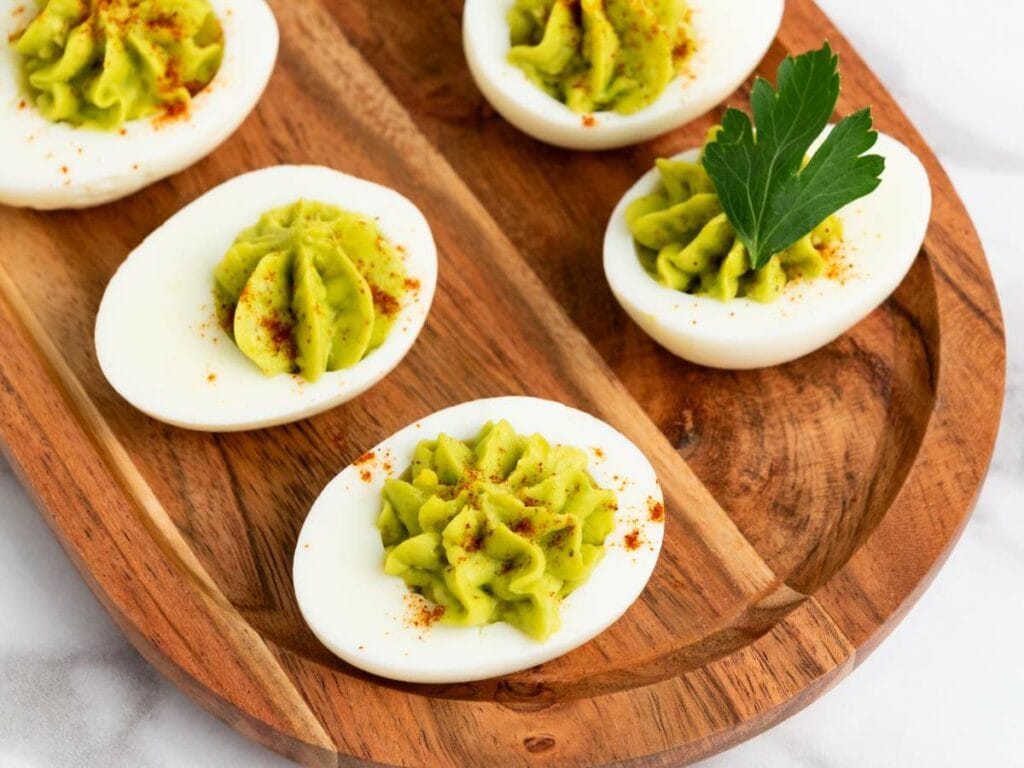
Getting them somewhere in one piece comes down to the container. Find a long, shallow, rectangular one with a tight lid and stand them in a single row. They won’t survive being stacked two deep, so don’t try it. When it’s a real occasion I carry the parts separately instead. Whites boiled, peeled, halved and hollowed in one container, filling in another, and I pipe them when I arrive.
Taste the filling before any of it goes into a white. Avocado and yolk together can land rich and flat, and the fix is acid before salt. A little more lemon, or a splash of apple cider vinegar if you want that sweet-sour edge.
How to Serve Deviled Eggs Without Mayo
On a charcuterie table they do one specific job. They’re the only thing on the whole spread that’s soft and cold and doesn’t need a cracker. Put them somewhere people can reach without leaning across the cheese, and put them out last. They empty fastest, and an empty platter in the middle of a table looks sad.
Deviled eggs are about as old-fashioned as food gets, and people still seem faintly surprised to find them on an appetizer tray. Like somebody’s grandmother wandered in. I always laugh thinking about what those same people would make of eggs in purgatory, which is eggs poached in spicy tomato sauce and served as dinner.
Creamy Avocado Deviled Eggs Without Mayo
Video
Ingredients
- 6 large eggs
- 1 medium avocado
- 2 tablespoons sour cream
- ½ medium lemon juiced
- ½ teaspoon salt
- ¼ teaspoon ground black pepper
- 2 sprigs parsley for garnish
- 2 pinches paprika powder sweet or smoked, for garnish
Instructions
- Place your eggs in a pot and fill it with water an inch above the eggs. Bring to a boil, then cut the heat, cover, and leave for 10 minutes. Once cooked, carefully move the eggs to a bowl of ice water to cool for 5-10 minutes.If you’re unsure about how much water to use, try placing the eggs in the pot first, fill it with water, then remove the eggs before heating. It’s a simple trick that works every time.

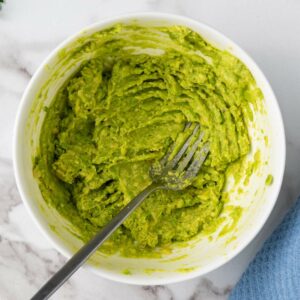
- Cut the avocado in half, remove the pit, and mash it in a bowl until smooth.
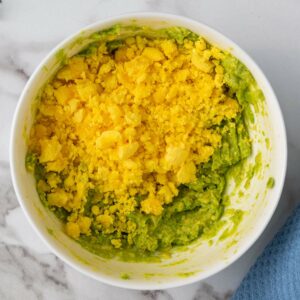
- Next, peel your cooled eggs and slice them in half lengthwise. Scoop the yolks into the bowl with the mashed avocado.
- Add sour cream, lemon juice, salt, and pepper, then stir everything together until creamy and well blended.
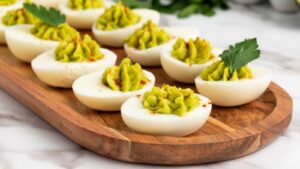
- Rinse the egg white halves to clean off any leftover yolk bits, then gently pat them dry. Spoon the creamy avocado filling into a piping bag and carefully pipe the mixture into each egg half. No piping bag? A spoon will work sufficently, but is little more messy.

- Finish with a sprinkle of paprika for a hint of spice and some fresh parsley for color and extra flavor. Serve right away or refrigerate until you’re ready to enjoy!

Notes
- Older eggs peel more cleanly than fresh ones. If you have a choice, use the ones that have been in the fridge longest.
- Ice water, not cool water, and give them at least 5 minutes before you start peeling.
- For the neatest whites, peel with the bowl of a teaspoon slid between the membrane and the white rather than with your fingers.
- Taste the filling before piping. If it tastes rich and flat, add acid rather than salt: more lemon juice, or a splash of apple cider vinegar.